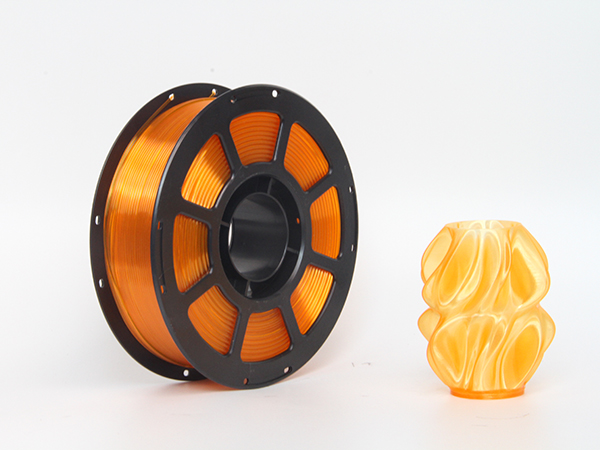
How to Choose the Right 3D Printing Filament for Industrial Applications: A Guide from SunDots
Introduction
In the evolving landscape of additive manufacturing, selecting the right 3D printing filament is critical for achieving functional, durable, and cost-effective parts. At SunDots, with over 18 years of manufacturing expertise (est. 2005), we understand that industrial users—from automotive to medical device makers—demand materials that meet stringent performance standards. This guide will help you navigate the most common industrial filaments, focusing on our high-performance PLA, PETG, ABS, Nylon, PEBA, TPE, and TPU offerings, backed by our ISO 9001, CE, RoHS, and REACH certifications.
Understanding Your Application Requirements
Before selecting a filament, assess your part’s end-use environment. Key factors include:
- Mechanical Strength: Tensile strength, impact resistance, and flexural modulus.
- Thermal Resistance: Glass transition temperature (Tg) and heat deflection temperature (HDT).
- Chemical Resistance: Exposure to oils, solvents, or UV.
- Surface Finish: Aesthetics, layer adhesion, and post-processing needs.
- Tolerance & Precision: Dimensional accuracy for mating parts.
Our 20+ R&D engineers collaborate with clients to match filament properties to these requirements, leveraging our 35+ patents in material science.
PLA for Industrial Prototyping
Polylactic Acid (PLA) is the most widely used filament for rapid prototyping. SunDots offers several specialized PLA variants:
- Basic PLA: Easy to print, low warpage, ideal for concept models and jigs.
- Matte PLA: Reduces glare and hides layer lines for presentation parts.
- Silk PLA: Provides a lustrous finish for consumer-facing prototypes.
- Marble PLA: Adds a stone-like texture for architectural models.
- High Speed PLA: Optimized for fast printing (up to 300mm/s) without sacrificing quality.
Best For: Low-stress prototypes, fit testing, and short-run tooling where heat resistance below 60°C is acceptable.
PETG for Functional Parts
Polyethylene Terephthalate Glycol (PETG) bridges the gap between PLA and ABS, offering enhanced durability and chemical resistance. SunDots provides:
- Basic PETG: Excellent layer adhesion, good impact strength, and low shrinkage.
- High Sat PETG: Vibrant colors for visual parts.
- Low Sat PETG: Reduced gloss for matte functional components.
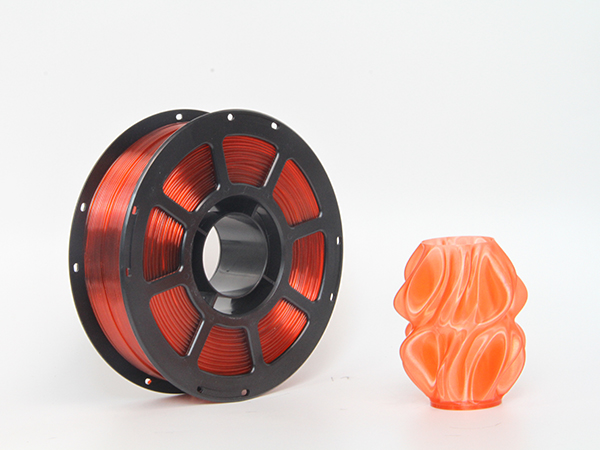
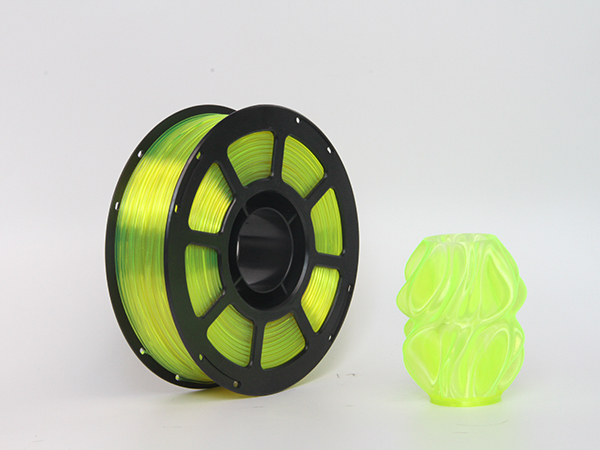
- Transparent PETG: Near-optical clarity for light guides or enclosures.
- High Perf PETG: Enhanced heat resistance (Tg up to 85°C) and tensile strength (55 MPa).
Best For: End-use parts like brackets, enclosures, and fluid-handling components that require moderate thermal and chemical resistance.
ABS for Engineering Prototypes
Acrylonitrile Butadiene Styrene (ABS) remains a staple for engineering-grade parts due to its toughness and heat resistance. SunDots ABS offers:
- High Impact Strength: Ideal for automotive interiors and consumer electronics.
- Post-Processing Flexibility: Can be sanded, machined, and vapor-smoothed.
- Thermal Performance: HDT of 95°C, suitable for under-hood applications.
Note: ABS requires a heated bed (90-110°C) and an enclosed printer to minimize warping. Our filament is tightly toleranced (±0.02mm) to ensure consistent extrusion.
Nylon (PA) for High-Strength Applications
Nylon is the go-to material for parts requiring exceptional strength, toughness, and wear resistance. SunDots Nylon features:
- Low Moisture Absorption: Pre-treated to reduce hygroscopic issues.
- High Elongation: Up to 300% for snap-fit designs.
- Chemical Resistance: Resists hydrocarbons and alkalis.
Best For: Gears, bearings, and structural components in automotive and industrial machinery.
PEBA for Flexible, High-Performance Parts
Polyether Block Amide (PEBA) is a thermoplastic elastomer that combines flexibility with strength. SunDots PEBA offers:
- Elastic Recovery: Returns to original shape after deformation.
- Fatigue Resistance: Ideal for cyclic loading parts.
- Lightweight: Density of 1.01 g/cm³, suitable for aerospace and sports equipment.
Best For: Seals, gaskets, vibration dampeners, and custom orthotics.
TPE and TPU for Flexible Prototyping
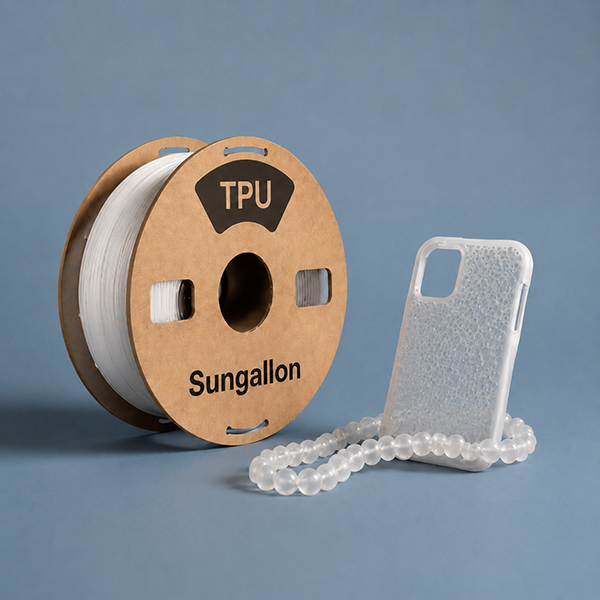
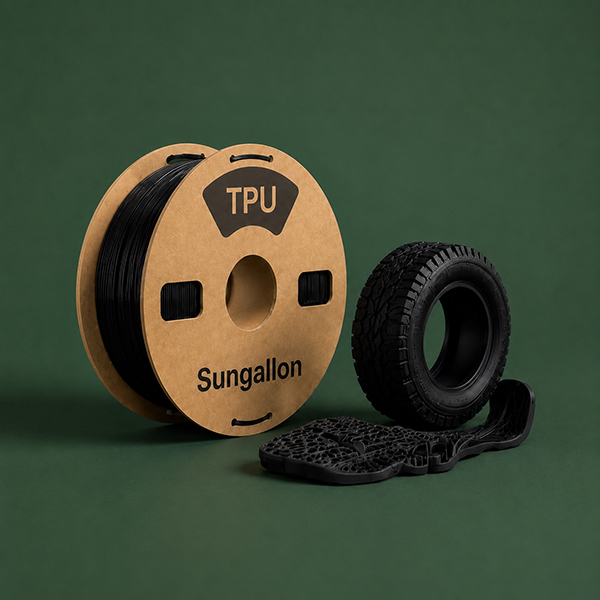
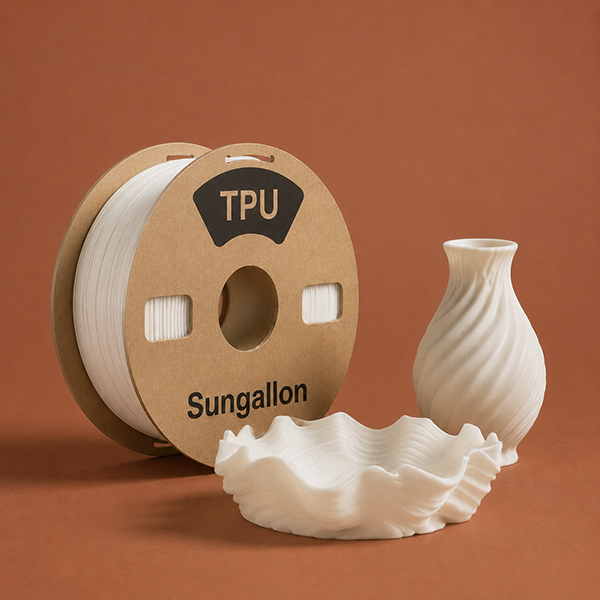
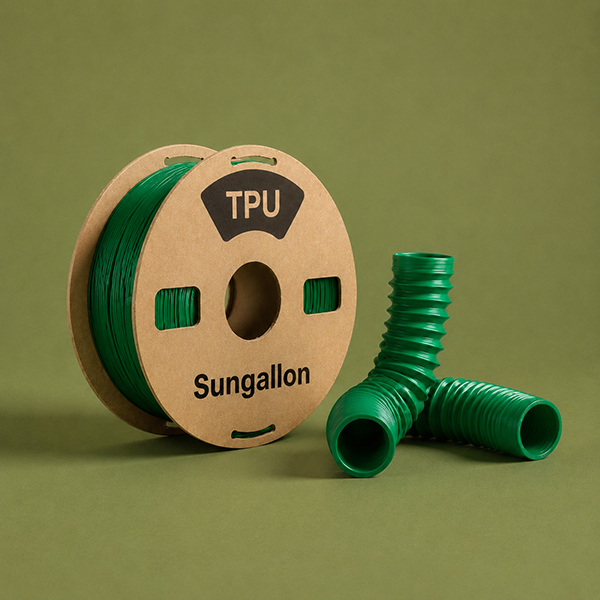
Thermoplastic Elastomer (TPE) and Thermoplastic Polyurethane (TPU) are soft, rubber-like materials. SunDots provides:
- TPE: Shore hardness 85A, excellent for overmolding and soft-touch grips.
- TPU: Shore hardness 95A, higher abrasion resistance for protective cases and wheels.
Printing Tips: Use slow print speeds (20-30mm/s) and direct-drive extruders for best results.
Quality Assurance and Certifications
SunDots operates a 34,227 sqm factory with 30+ production lines and an annual capacity of 30,000 tons. Every spool undergoes rigorous testing:
- Diameter Tolerance: ±0.02mm for consistent flow.
- Spool Winding: Perfect layer alignment to prevent tangles.
- ISO 9001: Quality management system in place.
- CE, RoHS, REACH: Compliance with European safety and environmental standards.
Our 35+ patents in filament formulation and manufacturing processes ensure you receive a product that performs reliably in demanding environments.
Conclusion
Choosing the right filament is a strategic decision that impacts part performance, production speed, and cost. Whether you need PLA for rapid prototyping, PETG for functional parts, or Nylon for high-strength applications, SunDots provides a comprehensive portfolio backed by decades of expertise. Contact our technical sales team for personalized recommendations, and explore our full range at SunDots3D.com.
SunDots: Your partner in precision 3D printing since 2005.