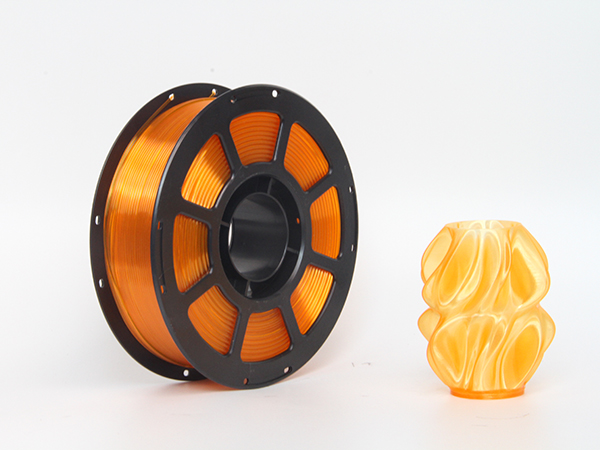
Why PEBA is the Future of Flexible 3D Printing: SunDots’ Breakthrough in High-Performance Filaments
Introduction
The 3D printing industry has long struggled with a trade-off: flexible materials like TPU offer elasticity but lack strength, while rigid materials like PLA or ABS provide durability but no flexibility. Enter PEBA (Polyether Block Amide), a thermoplastic elastomer that bridges this gap. At SunDots, with over 18 years of expertise in filament manufacturing and a 34,227sqm factory producing 30,000 tons annually, we have developed a PEBA filament that delivers unprecedented performance for industrial and maker applications. This article explores why PEBA is transforming additive manufacturing and how SunDots is leading the charge.
What is PEBA?
PEBA is a high-performance thermoplastic elastomer known for its exceptional elasticity, impact resistance, and chemical durability. Unlike TPU, which relies on hard and soft segments for flexibility, PEBA uses a block copolymer structure that provides superior mechanical properties. It is widely used in automotive, sports equipment, and medical devices due to its ability to withstand repeated stress without degradation.
Key Properties of PEBA
- High Elasticity: Elongation at break up to 400%, ideal for snap-fit parts and gaskets.
- Excellent Fatigue Resistance: Withstands millions of cycles without cracking.
- Chemical Resistance: Resists oils, greases, and solvents better than TPU.
- Low Density: Lighter than TPU, reducing part weight without sacrificing strength.
- Broad Temperature Range: Functional from -40°C to 120°C.
SunDots’ PEBA Filament: Engineering Excellence
Our PEBA filament is the result of extensive R&D by our team of 20+ engineers and 35+ patents. We use high-purity raw materials and advanced extrusion lines to ensure consistency and reliability. Key features include:
- Diameter Tolerance: ±0.02mm for flawless printing.
- Layer Adhesion: Optimized for strong interlayer bonding, reducing delamination.
- Printability: Compatible with standard 3D printers using a heated bed (60-80°C) and nozzle temperature of 230-260°C.
- Spooling: Vacuum-sealed with desiccant to prevent moisture absorption, a common issue with flexible filaments.
Compliance and Certifications
SunDots’ PEBA filament meets ISO 9001, CE, RoHS, and REACH standards, ensuring it is safe for industrial and consumer use. Our factory’s 30+ production lines allow for scalable manufacturing, with exports to 50+ countries including the USA, Germany, and Japan.
PEBA vs. TPU: A Comparative Analysis
While TPU remains popular for its low cost and ease of printing, PEBA outperforms it in demanding applications. Here’s a breakdown:
| Property | TPU | PEBA |
|---|---|---|
| Tensile Strength | 20-40 MPa | 30-55 MPa |
| Elongation at Break | 300-600% | 300-400% |
| Fatigue Life | Moderate | Excellent |
| Chemical Resistance | Good | Better |
| Print Temperature | 210-230°C | 230-260°C |
| Cost per kg | $30-50 | $60-90 |
For applications requiring long-term durability, such as automotive seals or prosthetic components, PEBA’s higher cost is justified by its superior performance.
Applications of PEBA in 3D Printing
1. Automotive and Aerospace
PEBA is used for lightweight, flexible components like gaskets, vibration dampeners, and fuel system parts. Its resistance to oils and heat makes it ideal for under-hood applications.
2. Medical Devices
With its biocompatibility and sterilization resistance, PEBA is used for custom orthotics, prosthetics, and surgical guides. SunDots’ PEBA filament meets medical-grade standards for prototyping and low-volume production.
3. Sports and Recreation
From impact-resistant shoe soles to flexible drone frames, PEBA’s energy return properties enhance performance. For example, running shoe midsoles printed in PEBA offer better cushioning than traditional EVA foam.
4. Industrial Tooling
PEBA is used for soft-touch grips, jigs, and fixtures that require repeated bending without breaking. Its low friction coefficient also makes it suitable for sliding components.
Practical Tips for Printing with PEBA
- Drying is Critical: PEBA absorbs moisture quickly. Dry at 70-80°C for 4-6 hours before printing.
- Bed Preparation: Use a PEI sheet or glass bed with glue stick for adhesion. Enclosed printers are recommended to maintain temperature stability.
- Print Speed: Start at 30-50 mm/s. Slow speeds improve layer adhesion for flexible parts.
- Retraction: Minimal retraction (1-2mm) to avoid stringing. Use direct-drive extruders for best results.
- Post-Processing: PEBA can be dyed or painted. Annealing at 100°C for 30 minutes improves mechanical properties.
Why Choose SunDots for PEBA?
- Proven Track Record: Since 2005, we have supplied filaments to 50+ countries, with 226 employees dedicated to quality.
- R&D Expertise: Our 20+ engineers continuously refine formulations for better printability and performance.
- Sustainability: We use eco-friendly practices, including recycling scrap material, to reduce waste.
- Customer Support: Free technical support and sample packs for B2B buyers.
Conclusion
PEBA is not just an alternative to TPU; it is a game-changer for applications demanding both flexibility and strength. SunDots’ PEBA filament, backed by years of manufacturing excellence and ISO certifications, offers reliability and performance that professionals trust. Whether you are prototyping automotive parts or creating custom medical devices, PEBA from SunDots unlocks new possibilities in 3D printing.
Explore our PEBA filament range at SunDots3D.com or contact our sales team for bulk orders. The future of flexible printing is here.