
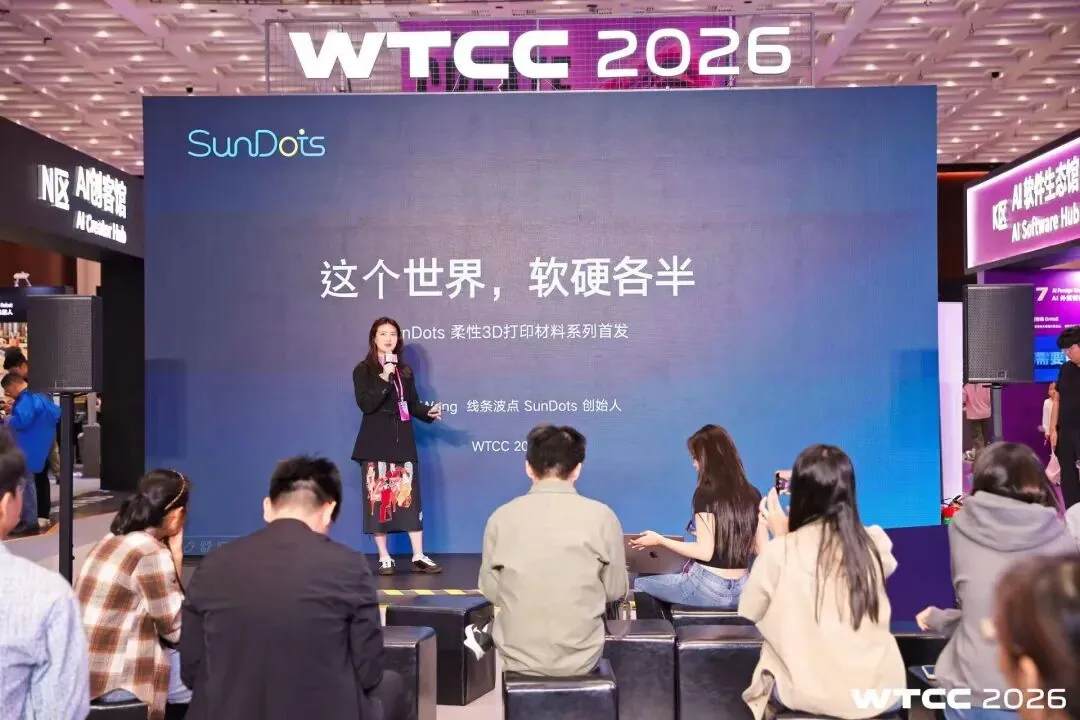
From 22 to 25 October 2026, Sundots joined WTCC in Shanghai and launched a flexible TPU and TPE filament series under the line “This world is half soft, half firm.” The range is for parts that need to bend, cushion, and still be useful — not only hold a shape on a screen.
Elasticity, surface, and a part you can use
The series runs from high rebound to different surface finishes. A print can keep its form and also offer stretch, touch, and a job to do: an elastic structure, a cushioning piece, or a model people actually pick up.
Four flexible grades, now launched
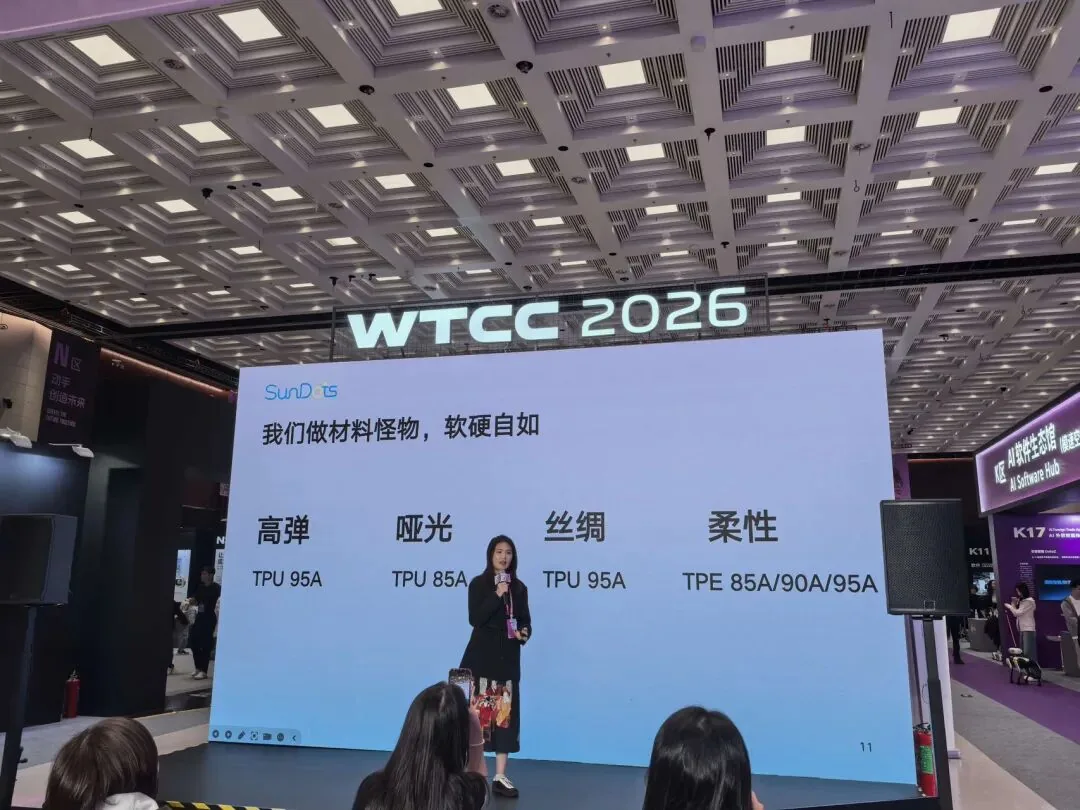
High-elasticity TPU 95A is the lead grade. It is meant to feel more elastic than a conventional TPU, with rebound aimed closer to a PEBA-type elastomer, while staying on a TPU printing workflow. Use it as a trial material for elastic structures, cushioning parts, and creative models. The PEBA comparison is a direction for that trial, not a replacement for the current technical sheet or a printed sample.
Matte TPU 85A is the softer, low-glare option: a fine matte surface for designs where the finish should stay quiet and the hand feel should stay soft.
Silk TPU 95A keeps the flexibility of TPU and adds a silk-like sheen, for a flexible part that also needs more highlight.
TPE is available at 85A, 90A, and 95A, from a softer touch through to a firmer flexible part. Hardness is only one line in the brief. The printer, the feed path, the geometry, and a sample still decide whether a grade fits.
High-elasticity TPU 95A is already in the Sundots catalogue, together with TPE 85A and TPE 90A. For matte TPU 85A, silk TPU 95A, and TPE 95A, name the grade when you request samples so the current spool can be confirmed.
Formulated and made in Heyuan, for a print that behaves
Sundots develops and manufactures these flexible materials in Heyuan. Formulation, processing, and how a spool actually prints are one piece of work: flexible-material practice carried into filament for desktop and small-production printers.
Softness is not the only question. A useful grade has to feed and print with enough consistency for a model, a design study, or a functional piece. Ask for the technical sheet for the exact grade, then print a representative part on the machine you will use.

Put the material next to the people who keep making
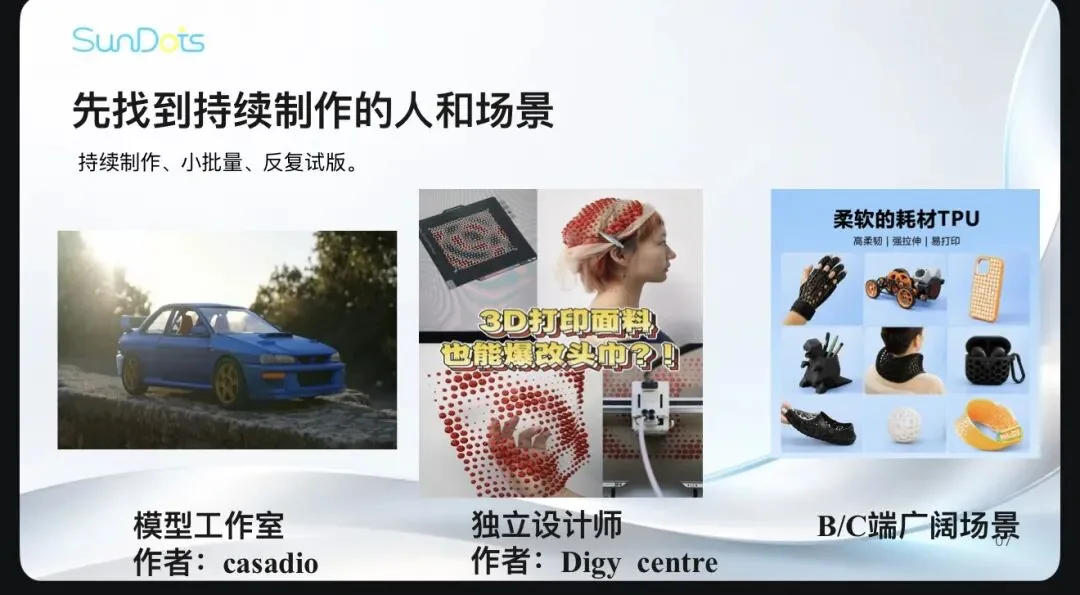
At the WTCC launch, Sundots also talked about how a new filament meets a real project: creators and designers, machine and software partners, the materials team, and the communities that print.
In August 2026, Sundots opened a 1,000 m² makerspace in Shenzhen for hands-on work, technical conversation, and application trials.
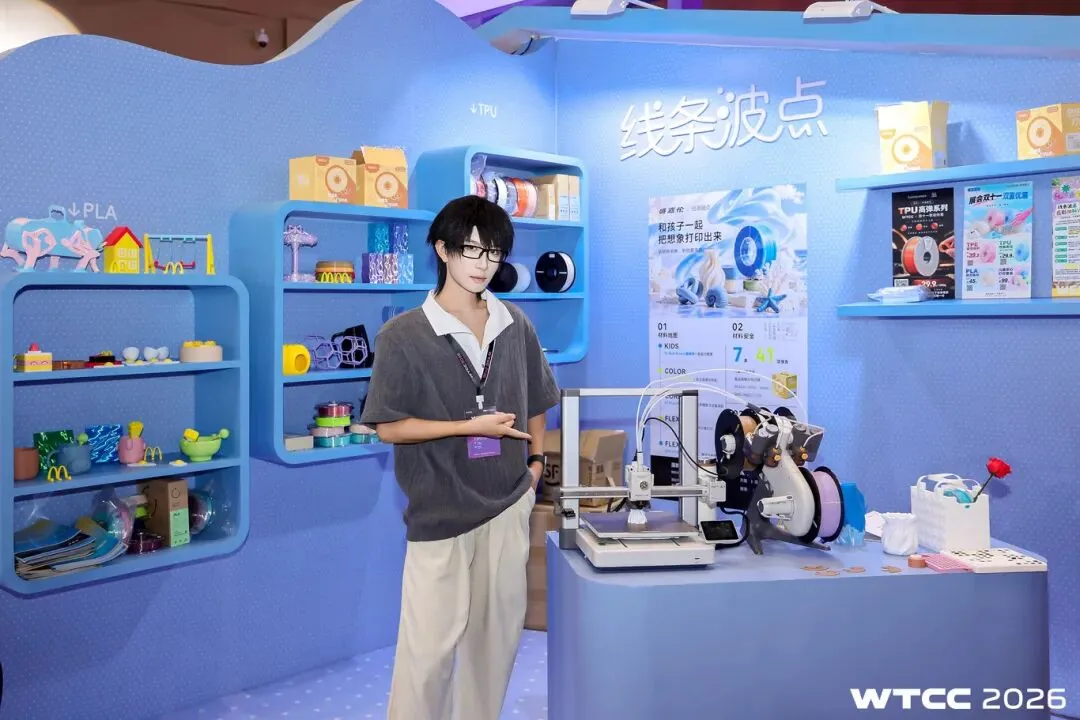
The booth story from the same week is a separate article. If you want the nameplate press and the floor, start there. This page is the material.
The series is out. Start with a sample.
High-elasticity TPU 95A, matte TPU 85A, silk TPU 95A, and TPE 85A, 90A and 95A can be sampled. Tell us the printer, the part, the hardness you have in mind, and whether this is one piece, a short run, or an OEM program.
This world is half soft, half firm. If the next part needs to bend, start with the grade and a spool you can test.
Related pages
This note follows Sundots’ 26 October 2026 launch announcement. Rebound comparisons describe the direction of the grade. Confirm the current technical sheet and a representative print before you rely on a property.